
Free Content · Agents · Admin
How I Trained My VA to Save Me Over 20 Hours a Week
The five-system blueprint BridgeVA® installs with every real estate virtual assistant placement, and the hours each one gives back.
By BridgeVA® Real Estate Virtual Assistants · September 9, 2026
The first virtual assistant I ever hired quit on me in six weeks, and looking back, I would have quit on me too.
I was running a brokerage and flipping houses at the same time, closing a few deals a month, and my calendar looked like somebody had spilled a box of crayons on it. I hired her because I was drowning. Then I handed her my email login, told her to \u201chelp me stay organized,\u201d and went back to drowning. She spent two weeks asking me what I wanted, I spent two weeks answering from my car between showings, and by week six we had both concluded that virtual assistants do not work for real estate agents.
The problem had nothing to do with her. I had hired a capable person and given her a blank page. What I should have given her was a set of systems. Once I figured that out, the second VA I hired gave me back more than 20 hours a week within her first month, and the five systems I built to make that happen are the same five our team installs with every agent placement today.
See where you can get your time back starting today.
The belief that turns good VAs into expensive inboxes
Most agents believe a VA saves time the moment they start. You hire the person, hand off the tasks that annoy you, and go sell houses. When it does not work out that way, the conclusion is usually that the VA was the wrong fit, the time zone was wrong, or agents are just too unpredictable to support remotely.
The belief costs you twice. First, it sends you through two or three hires before you find one who seems to \u201cget it,\u201d and each one of those cycles eats a month of onboarding and a few thousand dollars. Second, and this is the bigger cost, it keeps you in the loop on everything. A VA with no systems has to ask you what to do, which means every task still routes through your brain before it gets done. You have not removed yourself from the work. You have added a step to it.
The more useful way to see it is that a VA multiplies whatever you hand them. Hand them chaos and you get organized chaos, which still needs you. Hand them five systems with clear rules, and they can run your back office for a week without a single question. The hours come from the systems, and the systems have to exist before the VA logs in on day one.
That is why the install order matters. In the book Going Pro, I lay out a framework our team at BridgeVA teaches called The Owner's Method, and it runs in a fixed sequence: Eliminate, then Automate, then Outsource, then Delegate. You eliminate what should not be done at all. You automate what software can do on its own. You outsource remote, repeatable, screen-based work to a trained VA. You delegate the physical, in-market work, the showings and the sign installs and the lockbox drops, to a local person. Each of the five systems below runs through the first three moves before the VA ever touches it, which is exactly why they hold up.
System 1: Inbox and message triage
The belief to shift: Your inbox is where your business happens, so you have to see everything.
You do not have to see everything. You have to see what only you can answer, and in my experience that is somewhere between 10 and 15 percent of what lands in a producing agent's inbox on a given day. The rest is showing confirmations, vendor replies, listing alerts, newsletters you never read, title company updates, and questions that already have an answer somewhere in your business.
The install: Before the VA touches the inbox, I sat down for one hour and sorted a week of email into four buckets: answer now, answer today, file, and delete. Then I wrote one rule for each bucket in plain language. Anything from an active client or a cooperating agent on a live deal is answer now, and the VA flags it and texts me. Anything with a question the VA can answer from our FAQ document is answer today, and the VA handles it and logs it. Anything informational gets filed by transaction. Anything that is a subscription or a solicitation gets unsubscribed and deleted. The whole rulebook fit on one page.
What the VA owns: Clearing the inbox to zero twice a day, drafting replies for the answer-today bucket, flagging the answer-now bucket to me by text with a one-line summary, and keeping the FAQ document current every time a new question comes up twice. The same rules run across text messages and social media DMs, since those are just inboxes with different logos.
Hours back: Six a week. I had been checking email an average of 40 times a day, according to a screen-time report I wish I had never looked at, and most of those checks were interruptions to something that mattered more.
System 2: Calendar ownership and time-blocking
The belief to shift: You are the only person who can manage your own time, because you are the only one who knows what matters.
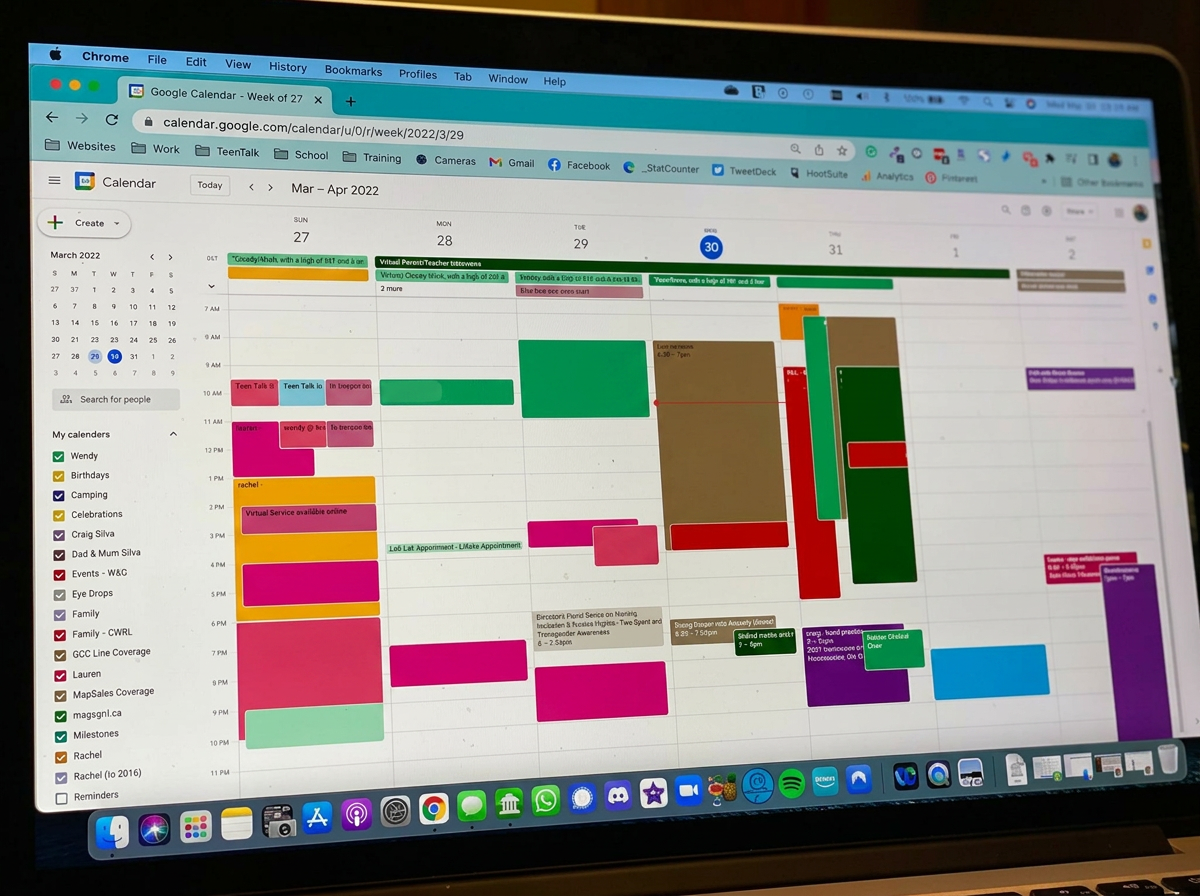
The calendar in the photo at the top of this article belongs to one of our clients, and it looked like that before his VA took it over. Every color was a different category of appointment and none of them had any structure. Showings sat next to prospecting blocks sat next to inspections, and the day got built one incoming request at a time. When your calendar is reactive, you spend your best hours on whoever asked first rather than on the work that pays.
The install: I built a weekly template with four kinds of blocks and gave the VA the authority to protect them. Prospecting blocks, three mornings a week, do not move for anything short of a signed contract. Appointment windows, where showings and listing presentations get booked. Admin blocks, one hour at the end of each day, where I review what the VA has flagged. And a buffer block after every appointment window, because drive time in real estate is real time. Then I wrote the rules: what can be booked where, how much notice is required, which clients get priority, and what the VA says when someone asks for a slot that does not exist.
What the VA owns: All scheduling. Every showing request, listing appointment, inspection, closing, and coffee meeting goes through the VA, who books it into the right window with the right buffer, sends the confirmation, adds the address and the contact to the invite, and moves the appointment if the client reschedules. Once a week the VA sends me a calendar snapshot for the next seven days with any conflicts flagged.
Hours back: Four a week, and that number understates it. The bigger change was that prospecting actually happened, three mornings a week, because nobody could book over it. NAR's 2026 Member Profile puts the median Realtor at 35 hours of work a week, with brokers and managers who sell at 40 to 45 hours. When I protected three prospecting blocks inside those hours, my pipeline stopped depending on my mood.
System 3: Lead intake and follow-up inside the CRM
The belief to shift: Speed to lead is your job, because the lead wants to hear from the agent.
The lead wants to hear from someone, fast. The research on this has been consistent for years. The Lead Response Management Study by Dr. James Oldroyd, run with InsideSales.com and MIT, found that contacting a lead within five minutes made a company 21 times more likely to qualify that lead than waiting 30 minutes. A separate Harvard Business Review audit in 2011 tested 2,241 US firms and found an average first response time of 42 hours, with 23 percent of firms never responding at all. Agents are not immune to that pattern. When a lead comes in during a listing presentation, it waits. When it comes in at 9 at night, it waits. When it waits, it goes to whoever answered.
The install: I picked one CRM and stopped keeping leads anywhere else. Every lead source, from the website to the sign calls to the open house sign-in sheet, feeds into it. Then I built a follow-up ladder: what the VA does at minute one, hour one, day one, day three, day seven, and day 30 for each lead type, with scripts for the text, the email, and the voicemail at each step. The VA does not qualify or negotiate. The VA makes first contact, gathers the basics, books the appointment into System 2, and tags the lead so I know exactly what is waiting for me.
What the VA owns: First response inside five minutes during business hours, the full follow-up ladder for every lead that is not yet in appointment, database cleanup so every contact has a source and a status, and a daily list of the leads that are ready for me to call. Nothing in the CRM is allowed to sit untagged.
Hours back: Five a week, made up of the follow-up calls I used to make late at night and the database work I used to do never. The revenue effect was bigger than the hours. Leads that used to wait hours got answered in minutes, and appointments that used to fall through the cracks got booked.
System 4: Transaction and listing admin checklists
The belief to shift: Every deal is different, so it cannot be turned into a checklist.
Every deal feels different because the people are different. The work is almost identical. A listing goes live the same way every time: photos ordered, disclosures pulled, MLS input, sign and lockbox scheduled, showing instructions set, marketing pushed, seller update sent. A contract moves to closing the same way every time: earnest money confirmed, inspection scheduled, deadlines calendared, lender and title looped in, repair requests tracked, walk-through booked, closing coordinated. The steps rarely change. What changes is whether anyone is tracking them.
The install: I wrote two checklists, one for listing launch and one for contract to close, with every step, the day it is due relative to contract or listing date, who is responsible, and what “done” looks like. Then I built each one as a template in our transaction platform so the VA could clone it for every new deal with two clicks. The first version took me an afternoon and I have edited it maybe a dozen times since.
What the VA owns: Cloning the checklist the moment a listing agreement or a contract is signed, ordering photos and pulling disclosures, entering the listing into the MLS for my review before it goes live, calendaring every deadline into System 2, sending the weekly seller or buyer update from a template, chasing signatures, and tracking every repair request and vendor invoice. I review, approve, and sign. The VA runs everything else.
Hours back: Four a week per active transaction, on average, and I was carrying three to six at a time. This is the system that gave back the most hours, and it is the one most agents skip because it takes an afternoon to build.
System 5: The daily end-of-day report and the weekly review
The belief to shift: If the VA is remote, you cannot really know what they are doing.
You can know exactly what they are doing, as long as you build the reporting system before you need it. The reason most agents feel out of the loop with a remote assistant is that they never asked for a loop. They asked for tasks, got tasks done, and had no rhythm for seeing the work.
The install: The end-of-day report is a five-line template the VA fills in and sends before signing off: what got done, what is waiting on me, what is waiting on someone else, what came in that was unusual, and one question if there is one. It takes the VA ten minutes and it takes me three to read. The weekly review is a 30-minute call every Friday with a fixed agenda: the scorecard (leads contacted, appointments set, transactions on track, inbox and calendar status), the questions that piled up during the week, and one system improvement we are going to make next week.
What the VA owns: The daily report, the weekly scorecard, the running list of questions so I am not interrupted with them one at a time, and the log of every system change so the rulebook stays current.
Hours back: Two a week, all of it from the interruptions that stopped. Instead of 15 quick questions across the day, I got one report and one call, and the VA got the answers in batches instead of waiting on me between showings.
Why the order matters
Install System 3 before System 2 and your VA books appointments into a calendar with no structure, which means your prospecting blocks disappear on day one. Install System 4 before System 1 and the deadline emails from title and the lender get lost in the noise your VA has not been trained to filter yet. Each system creates the foundation the next one stands on: a clean inbox feeds a protected calendar, a protected calendar receives the appointments the CRM produces, the CRM produces contracts that flow into the checklist, and the report closes the loop so all four keep improving.
The other thing the order does is make the VA's first week survivable. Inbox rules and a calendar template can be handed over on day one. Lead scripts and checklists come in week two, once the VA knows your business well enough to run them with judgment. The report starts on day one too, but it gets richer as the systems come online. By the end of week three, every system is running and the VA has stopped asking what to do.
Where the 20 hours come from
Add it up. Six from the inbox, four from the calendar, five from lead follow-up, four from transaction admin at a single active deal, and two from the reporting rhythm. That is 21 hours a week with one transaction in play, and it climbs from there. At three active transactions, which is where a lot of producing agents live, the total passes 29 hours.
These are my own numbers from my own business and from watching the agents our team has placed VAs with, so treat them as a starting estimate and build your own table. The way to do that is simple. For one week, track how many minutes you spend inside each of the five systems. Most agents who do this honestly find that the inbox and the transaction admin alone are past 15 hours before they ever count the calendar.
Then look at what you did with the hours. Using NAR's 2026 profile numbers, the median individual Realtor closed nine transaction sides in 2025 while the median team closed 32. The gap between those two numbers comes down to leverage, because nine sides is about what one person can produce when they are also their own assistant. When the 21 hours go back into prospecting, appointments, and negotiation, the production ceiling moves.
The part I got wrong the first time
Looking back at that first VA, I lost six weeks because I thought the hire was the leverage, when the leverage was the five systems I had not yet built.
This is also why our team at BridgeVA builds the systems into the placement rather than leaving them to the agent. What we call The Bridge Advantage is the difference between a talent pool that sends you a resume and a strategic partner that has spent years placing virtual assistants inside real estate businesses and knows exactly which systems have to exist before the VA logs in. When an agent works with us, the inbox rules, the calendar template, the follow-up ladder, the checklists, and the reporting rhythm get installed alongside the person, in the order above, in the first three weeks. The VA arrives trained on the real estate side. The systems arrive with them.
See where you can get your time back starting today.
Work Session
Ask yourself:
- If your VA started Monday morning, which of the five systems could you hand them in writing today, and which ones exist only in your head?
- How many times did you check your inbox yesterday, and how many of those checks turned into something only you could do?
- When was the last time a lead sat for more than an hour before someone responded, and what happened to it?
- Which steps of your last three transactions did you repeat by memory rather than from a checklist?
- What would you do with three protected prospecting mornings a week that nobody could book over?
Do this:
Build System 1 this week. Spend one hour sorting the last seven days of email into four buckets: answer now, answer today, file, and delete. Write one plain-language rule for each bucket on a single page, including who counts as answer now and where the answer-today answers live. Then start a document called FAQ and add every question you answered more than once this week. That page and that document are the first thing your VA reads on day one, and if you already have a VA, hand them over on Monday and measure how many times you open your inbox by Friday.
Sources
- Ainora. “5-Minute Lead Response Time Study: HBR, InsideSales, Drift Findings (2026).” July 27, 2026. https://ainora.lt/blog/lead-response-time-5-minutes-study-2026
- Ainora. “Lead Response Time: Every Study (MIT, HBR, Drift).” July 1, 2026. https://ainora.lt/blog/lead-response-time-statistics-every-study-2026
- HousingWire. “NAR 2026 member profile shows Realtors more experienced.” June 25, 2026. https://www.housingwire.com/articles/nar-2026-member-profile-experience/
- LeadAngel. “Lead Response Time: Why It Matters & How to Improve It in 2026.” August 2026. https://www.leadangel.com/blog/operations/lead-response-time/
- National Association of REALTORS®. “REALTORS® Show Strong Commitment to Profession Amid Market Headwinds, New NAR Report Finds.” August 6, 2025. https://www.nar.realtor/newsroom/realtors-show-strong-commitment-to-profession-amid-market-headwinds-new-nar-report-finds
- Oldroyd, James, Kristina McElheran, and David Elkington. “The Short Life of Online Sales Leads.” Harvard Business Review, March 2011. (Cited via Ainora, 2026.)
- Oldroyd, James. “Lead Response Management Study.” InsideSales.com and MIT, 2007. (Cited via Ainora and LeadAngel, 2026.)